My current drawing research was informed by the research conducted for my PhD which was completed in 2022. The thesis clarifies the value of a rough sketch, or ‘process drawing’, in the creative processes of Visual Communication Design students at Western Sydney University (WSU). Why don’t design students make rough sketches or thumbnails anymore? The demise of the rough sketch has been ascribed to the easy availability of cheap online resources, client expectation and reduced deadlines and budgets. AI generative tools now provide another means of creating “ready made” solutions that students use to find short cuts to thinking deeply about a design problem to a human centred problem or desire. My reserach aimed to explore students’ practices and find ways to encourage students to start with an evaluation of the problem first.
Back to the drawing board? Exploring process drawing and pathways to drawing participation in Higher Education for graphic design students.
This thesis employs qualitative and quantitive methods including:
- Classroom observations
- Pre and post questionnaires
- Student interviews and conversation analysis
- Analysis of speed drawing exercises
- Analysis of my creative processes
This research adds to the critical discourse in drawing research, which argues that process drawing should continue to be clarified, demonstrated, and encouraged in design schools. Download and have a read: Back to the drawing board thesis.pdf
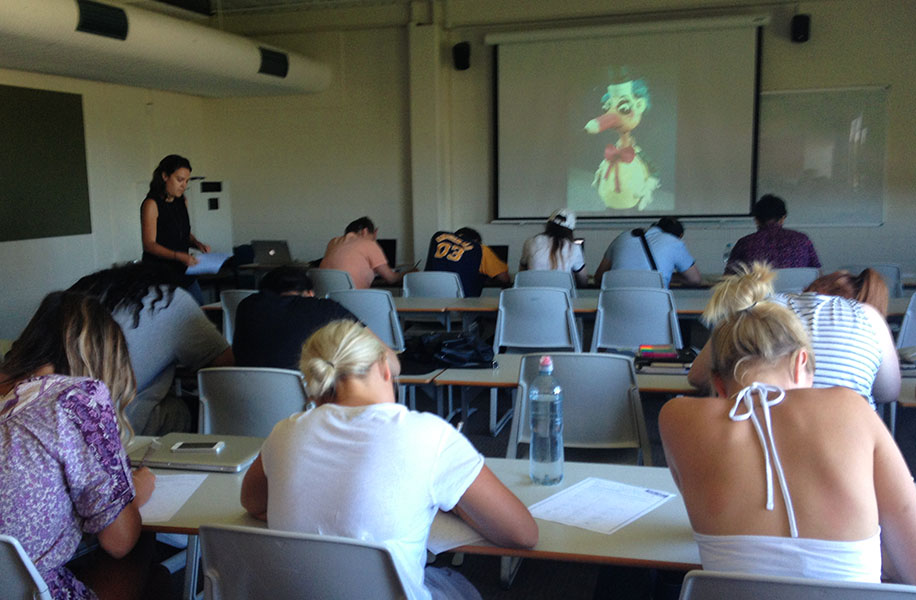
The development of the thesis drawing activities was informed by my visual arts and design practice which continues to be an important aspect of my images. This ongoing exploration of visual perception, repetition, and other aspects of phenomenological drawing processes are combined with a figurative, narrative approach. My love of bodies, the natural world and storytelling is always present in my work.
In turn, my drawing and image-making practice informs further explorations into the power of drawing to not only create, but build confidence and connections which are vital for our wellbeing and mental health. In a post COVID, (and AI dominated world), our individual and collective identity has been eroded as we face the escalating effects of climate change. We are loosing confidence in facts and long held beliefs in our human ability to effect change when we need it most. We are loosing our control on the stories that define us. The stories of marginalised communities like those found in remote, poor, indigenous communities like Timor-Leste are lost in the regurgitated images and words stockpiled on the data rubbish pile and rehashed by AI into something we think is meaningful. My research is interested in providing drawing and storytelling tools to allow communities to identify and work through problems they face through telling their stories.
Drawing can give a voice to the voice-less.

 Improdraw