AiR Hangar: Lisbon &
Cerdeira Art & Craft Village, Lousã
Finding my way through drawing: 10th – 19th April 2017
In 2017, I applied for a short artist’s residency to revisit the practice-led component of my PhD thesis at the contemporary art and research space, Hangar, in the heart of Lisbon, Portugal. I aimed to resume my regular drawing and writing practice in a creative environment. One of Hangar’s objectives is “to promote art research and generate a favourable environment for the cross-sector transmission of knowledge.”
Before leaving Australia, I had packed my water colour, gouache and a selection of papers, pens and pencils. I had brought my iPad Pro and ‘Pencil’ stylus with my favourite sketch app, Procreate. A beautiful travel sketchbook was made and given to me by my sister, Cathy. There was an expectation that I would be creating a pictorial account of the places I visited but my main objective was to find the value of drawing to my personal practice. Through the act of drawing every day, I hoped to calm my mind and provide a thinking trail of my progress. So, on my way to the residency, I started drawing in my new travel diary.
I intended to evaluate and use these drawings in my thesis. My family and friends would also want to see my diary on my return. With this in mind, my first entries were self-conscious and ‘precious’ in their approach. I feared the judgment of these drawings. Would they be good enough? I reflected that these feelings of doubt must be how a first-year design student feels when they are required to produce a ‘process diary’ as part of their assessment. They too would feel exposed and inadequate. It is no wonder that most students choose to hand in a collection of images found on the web rather than show unedited working drawings.
Like many of my students, I found it hard to start drawing in my precious diary. I was also worried about wasting the beautiful diary paper on ‘warm-up’ sketches. I needed to ‘loosen up’ and allow my thoughts to unwind through the act of drawing. I reverted to using loose sheets of paper that I could discard if necessary. I decided to release the ‘pressure’ on myself and only add to the diary when I felt inspired to do so. As a result I did very few drawings in this diary.
Before I left Australia, I had imagined myself ‘en plein air’ drawing across Europe and Asia. When I reached Hangar, I went for a walk every morning with my art materials on my back. I visited the many ancient, modern and contemporary art galleries on offer in Lisbon, but there were limited opportunities and locations to sit and draw productively.
At the beginning of my travels, I just wanted to be an observer without being observed. My confidence was low. It had been several years since I had drawn in public. In addition to these feelings of self-doubt, someone had attempted to steal my purse on my second day in Lisbon, so I was feeling conspicuous and ‘on guard’. I decided not to draw attention to myself by using my large iPad.
Figure1.1: Hangar has a contemporary gallery and presentation space. When I first arrived, I attended a presentation by the young Brazilian artist and researcher of poetic transits, Van Holanda.
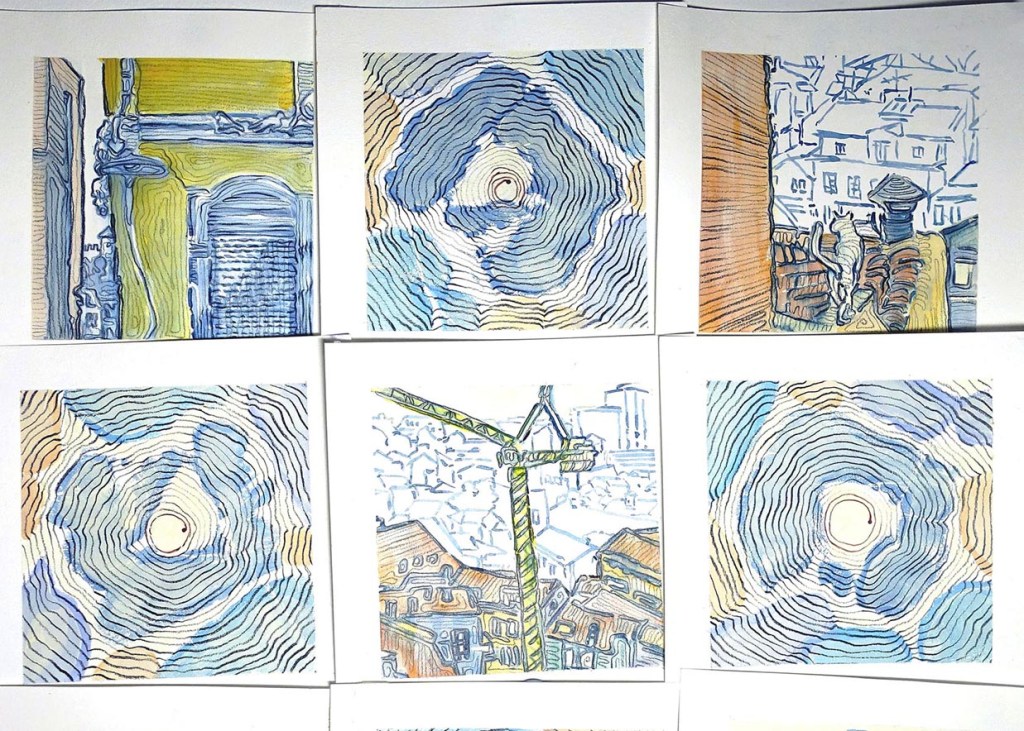
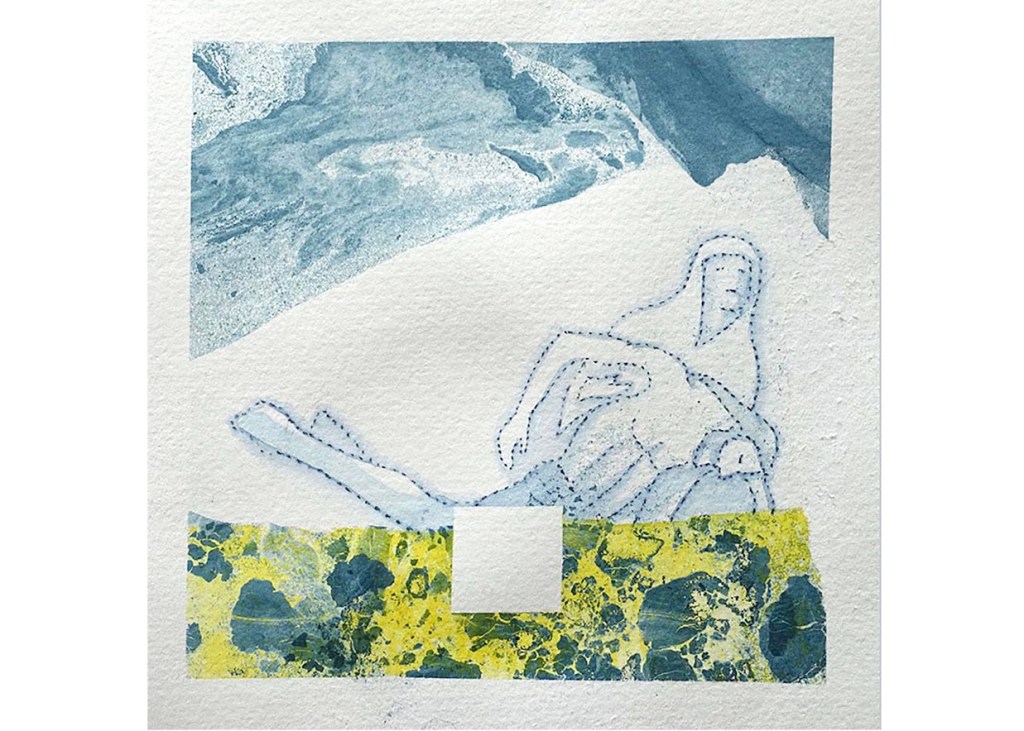

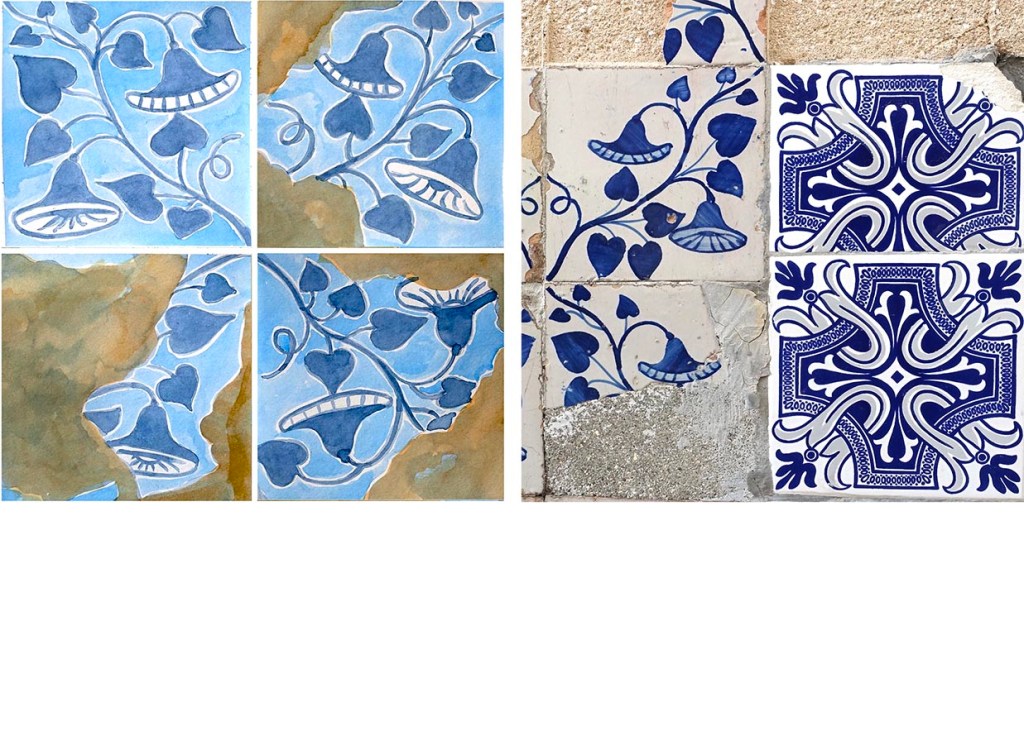

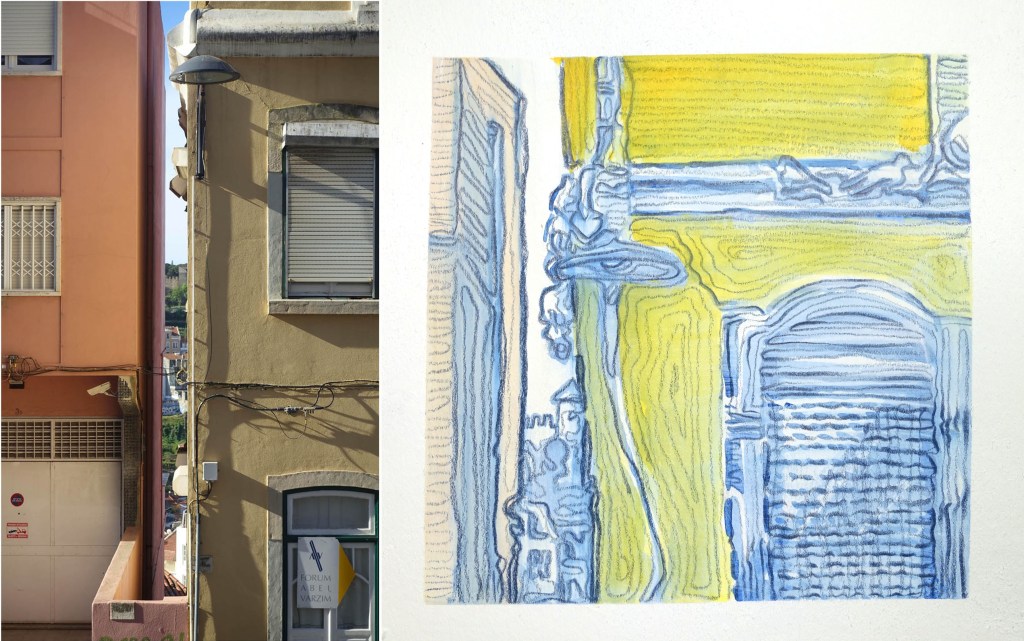
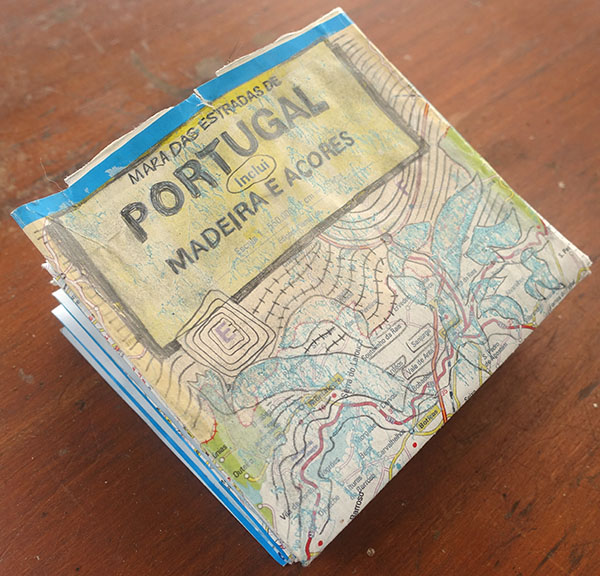
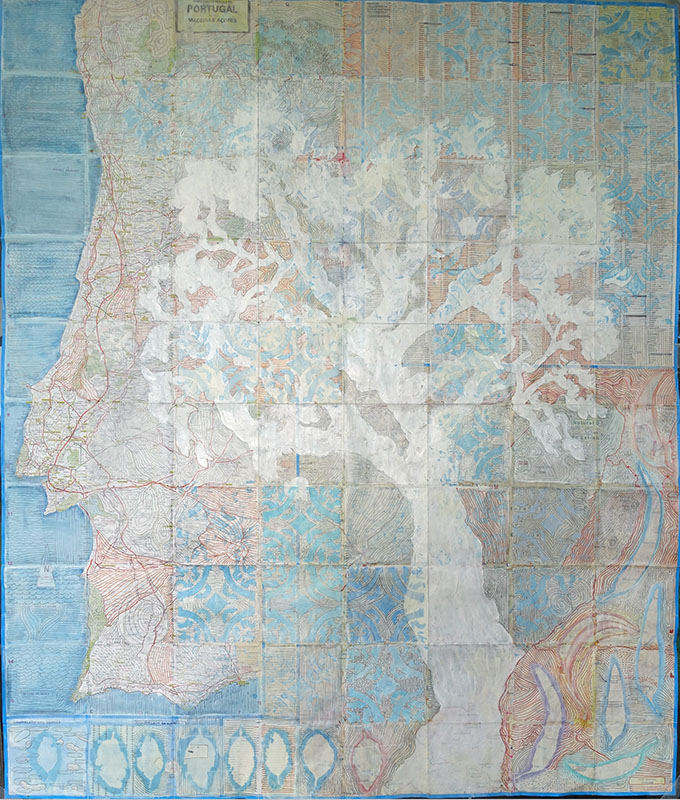
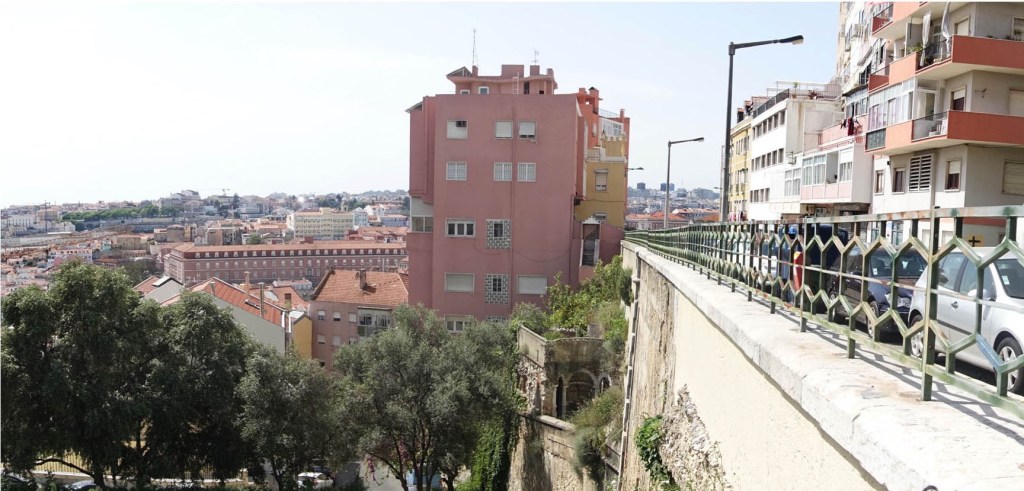
Despite being lost continuously and on the lookout for pickpockets, I loved Lisbon’s crowded laneways with their mishmash of styles and cultures. Lisbon is like a giant old patchwork coat fraying at the edges. The cobbled streets and crumbling tiled buildings hint at a glorious past. The old crumbling tiled buildings were a novelty to my Australian eyes. I walked everywhere, did some quick observational sketches, and took lots of photos.
In the evening, I looked through my photos and researched what I had seen during the day. Occasionally I would have a chat with a fellow resident in the shared kitchen. It was the perfect creative environment; however, I found it surprisingly difficult to get back into my drawing practice. I had lost momentum.
From my experience and traditional art training, I knew that if I kept drawing, I would eventually regain my rhythm and flow. In the past, quick ‘gesture’ drawings conducted at the start of a life drawing session, had helped me ‘loosen up’.
I could hear the past advice of my drawing teachers; “Draw from your shoulder,” “Try drawing with your other hand”, “Don’t rub out”, “Start from the point of energy”, “Draw the negative spaces”, “Look at your subject, not your drawing”, “Turn your drawing upside down”, and “Let your hand do the thinking”. I had heard and taught these ‘loosening up’ strategies many times over the years.
I revisited my notes that described and traced the early developments of drawing education. Art schools and academies have been developing drawing strategies since the Renaissance. John Ruskin introduced us to the elements of drawing; Rudolf Arnhem used theories of perception to awaken the creative eye; and the Bauhaus teachers, including Josef Albers, Philip Rawson, Kandinsky and Jon Berger, introduced us to gestalt theory and new ways of seeing. Later, Robert McKim and Betty Edwards developed drawing exercises designed to retrain the brain. Many of the traditional skills of drawing are no longer taught, replaced by contemporary drawing practices that challenge and extend the definition of drawing itself.
Angela Brew, one of the founders of the Thinking Through Drawing Network, proposes “drawing pedagogy teach the ‘doing’ of drawing, the nuts and bolts of practice, rather than teaching cognitive tricks to subvert everyday vision. By this method, one learns to draw by drawing, not by, as is often asserted, by learning to look.” Drawing is often taught as an experiential practice but to learn through the doing, one needs to suspend self-criticism and muster the confidence to start.
To get myself drawing, I revert to a simple hand eye coordination exercise that I had been exploring earlier in my research. For this drawing exercise, you just draw a central shape and using a continuous line (trying not to lift the pencil), trace around the shape following the contours, spiraling outward. Each part of the line informs the next, unravelling to the edges of the paper. It is a form of doodling, which I find meditative and relaxing. For me, this exercise produces a similar state of mindfulness as a yoga breath meditation. My mind drifts and wanders but instead of always coming back to the breath; I go back to the line.
 Improdraw