Art, Culture, and Inclusion in Timor-Leste: A Case Study of Participatory Visual Arts and Capacity Building
Research Question: How do community-based art workshops contribute to emerging artists’ creative practices, cultural preservation, gender inclusivity, economic sustainability, and capacity building? A case study of visual storytelling and printmaking workshops conducted with emerging artists in Timor-Leste.
My current research (2025-2026) investigates how community-based art workshops support creative development, cultural preservation, gender inclusivity, economic sustainability, and capacity building in post-conflict, marginalized communities. Focusing on the artists’ collective Arte Moris in Timor-Leste, it uses qualitative methods and printmaking workshops to engage young Timorese artists in storytelling activities. Operating with limited support in a politically unstable environment, collectives like Arte Moris play a vital role in building a resilient creative sector which enhance cultural wellbeing, support economic growth and help shape national identity.
Artists are central to post-conflict narratives of resilience and social justice. This project combines questionnaires, interviews and participatory storytelling and printmaking workshops to foster professional development, inclusivity, and creative expression amongst participants. By equipping artists with practical skills and producing exhibition-ready artwork, the research and visual outcomes aim to build the capacity and visibility of Arte Moris. Ultimately, the project seeks to strengthen Timor-Leste’s cultural sector and elevate young voices and promote community cohesion.My current drawing research was informed by the research conducted for my PhD which was completed in 2022. The thesis clarifies the value of a rough sketch, or ‘process drawing’, in the creative processes of Visual Communication Design students at Western Sydney University (WSU). Why don’t design students make rough sketches or thumbnails anymore? The demise of the rough sketch has been ascribed to the easy availability of cheap online resources, client expectation and reduced deadlines and budgets. What else is going on?
Methodologies:
- Unstructured participatory observations
- Multiple-choice questionnaire
- Interviews:
Expected outcomes:
- Enhanced understanding and documentation of emerging artists’ aspirations and creative practices,
- Contribution to cultural preservation and identity,
- Visual evidence of workshops’ impact,
- Empowerment and capacity building of emerging artists,
- Skill development through practical instruction,
- Increased capacity for Arte Moris and individual artists to showcase and sell their work.This research was informed by my thesis.
| |
|
| |
|
| Questions |
|
|
Group name and number of participants
|
Arte Moris, 15-20
|
|
Characteristics of the group that are relevant to the aims of the project
|
Examples of participant groups
- Established male artists who are part of the original artist collective.
- Young emerging male and female artists who are often tertiary students.
- High school aged students of the Arte Moris Free Art School which include both male and female.
|
|
Inclusion criteria
|
All Arte Moris members and students attending Arte Moris Free School workshops
|
|
Exclusion criteria
|
NA
|
|
Expected number and age of participants
|
15 – 20 participants ranging in age from 18 to 35 years old
|
|
Sample size and statistical power issues
Justify the number of participants needed for this study.
|
The number of participants is dictated by:
- the typical number of regular attendees to Arte Moris Free Art workshops, and active members,
- the room size and seating available in the Arte Moris studio space, and
- the availability and cost of the materials and equipment needed to conduct the workshops.
|
|
Describe what these participants will be asked to do
|
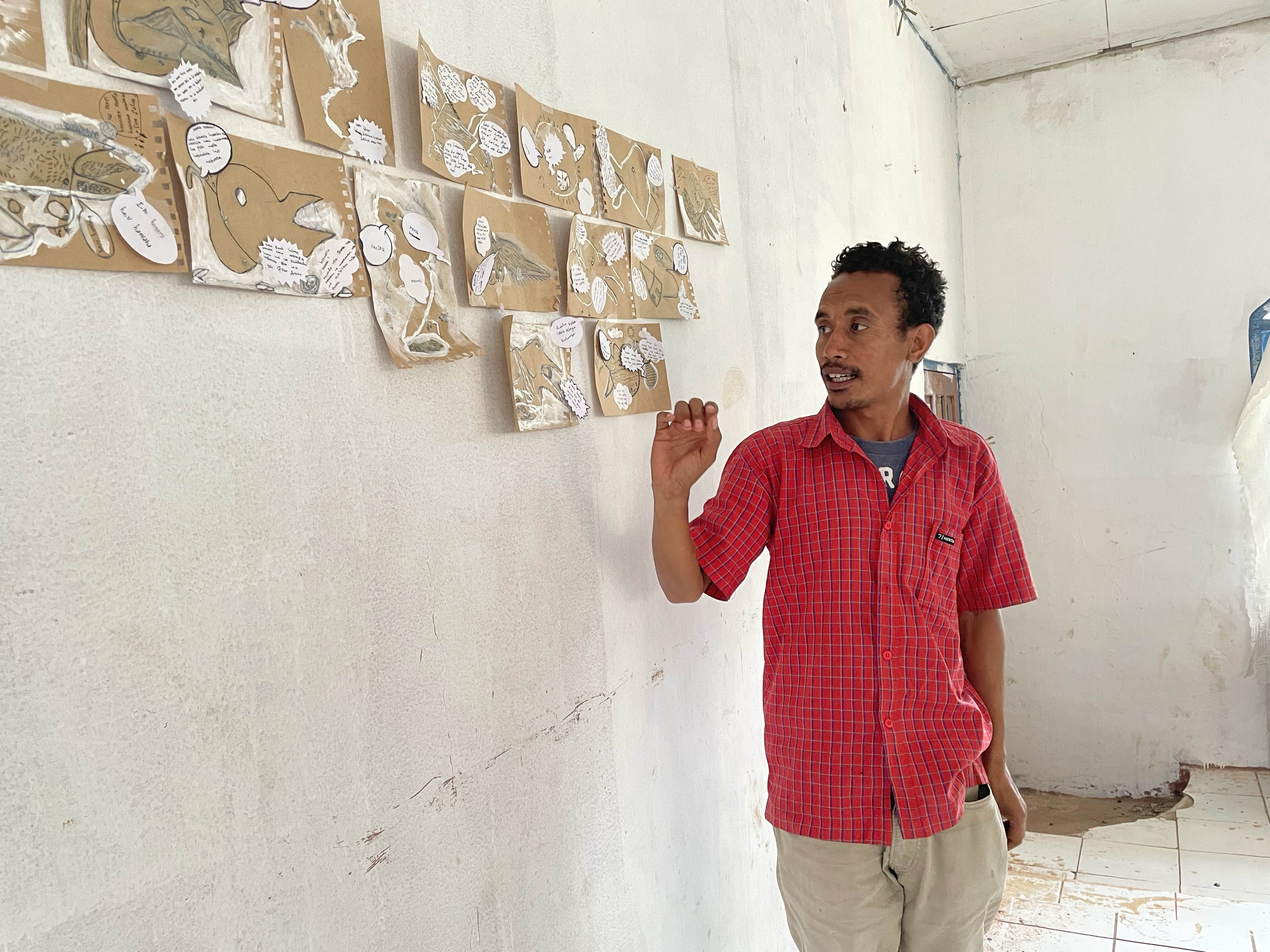
Participants will be asked to explore their traditional and contemporary stories through drawing and printmaking and produce exhibition ready artworks.
They will be invited to 2 x 4-hour workshops on the 9th and 10th July, 2025, which will include the following:
- a visual storytelling activity that aims to explore cultural identity and intergenerational connections through drawing characters and motifs from traditional and contemporary stories from literature or family folklore,
- idea generation to create a suitable image for a Lino cut design based on your story,
- instructions, demonstrations and applications of Lino-printing techniques,
- access to materials and equipment to print a limited series of Lino block prints derived from your designs on artist quality paper, and
- demonstrations showing how to prepare a print series for exhibition and sale.
Students will be handed a questionnaire printout at the beginning of the first workshop to be handed back to Dr Saunders during, or at the end of the workshops.
The questionnaire will take approx. 5 minutes to answer the multiple-choice questions.
The 20 minutes interviews will take place in a quiet room in the Arte Moris studio at the end of the 2nd workshop.
Completing the survey or being interviewed is not mandatory to attend the workshops.
Observations, photographs and videos will be taken during participants’ ideation processes. They will be notified of this in the Workshop introductions.
|
|
Follow up plans
|
The process drawings and artworks produced in the workshops will be scanned and uploaded to a convenient, agreed location.
The final artworks will form all or part of an Arte Moris printmaking exhibition proposed at XGRR gallery, Dili or another venue of Arte Moris choosing.
All participants will have access to these videos and images and can request removal of images they do not wish to be included.
The interviewees will have access to the transcript summary for approval and will be given an opportunity to request changes or omissions.
|
|
Recruitment
How will you identify and recruit participants? Include whether screening takes place before or after consent; who will initially approach the participants; how participants will receive the recruitment documentation; how much time a participant will have to consider participation.
Will participants be offered any form of reimbursement?
This can be written in conjunction with question 2.1.1 of the HREA.
|
An email and WhatsApp message will be sent to the Arte Moris group facilitator/teacher, Evang Pereira, with confirmed workshop dates, times. (See Recruitment_invitation_text_HJS00743). The following documents and a link to improdraw.com which contains the same information and documents will be sent 8 weeks prior to the first workshop and include:
· Participant Information Sheet
· Consent forms
· Questionnaire
This email will be forwarded by Evang Pereira to potential participants (who have internet access) and communicated verbally to potential workshop participants during regular Arte Moris art classes.
It is envisaged that the participants will have 4+ weeks to consider if they wish to attend the workshops.
The participants won’t be offered any financial reimbursement.
The workshops are free to attend.
Participants will use the equipment and materials provided by Western Sydney University and Dr Janet Saunders during the workshops. The materials left over will be donated to Arte Moris Free Art School.
All 15-20 participants will be given a printout and asked to complete the workshop questionnaire and hand back to Dr Janet Saunders by the end of the workshops. They will have 2 days to consider their answers. The questionnaire contains a tick box where they can indicate their interest in being part of the interviews.
The number of interviewees selected will be determined by the number of volunteers. It is expected that 4-5 interviews would provide a cross-section of different perspective within the available time and budget for both interviewees and the interviewer. The interviewee selection will be made in consultation with the Arte Moris teacher/facilitator, Evang Pereira who will advise. The questionnaire responses will also guide the selection process to include a diverse representation of both young male and female emerging artists from different backgrounds. It is hoped that interviewees are fluent in English, however this is not a selection criterion, as an English/Tetum translator will be present during the interviews.
Participants will be informed of the following in the Consent form:
You will receive instruction and artist quality materials to produce an exhibition ready Lino-print series. Your artworks can be exhibited and sold as part of future Arte Moris exhibitions or showcased through your individual networks and platforms.
The photos and videos taken during the workshops can be used to promote future activities at Arte Moris.
Individual artists retain copyright of their sketches and Lino-prints and scanned images can be used to make reproductions by the artist,
The research outcomes and publications may provide leverage for potential exhibition grants and future opportunities for Arte Moris.
|
|
Consent type
If you are seeking a waiver of consent for the use of pre-existing data, you must complete Section 11 of this form.
|
☒ Written ☐ Verbal
☒ Implied ☐ Waiver
☐ Opt-out ☐ Assent
|
|
Summary of consent process
The summary can be adapted from Question 2.2.1 of the HREA.
|
Written consent will be obtained through check boxes on the Questionnaire and Consent forms.
There is also implied consent through workshop and interview attendance, however participants and interviewees will be informed before and during the workshops that they can withdraw from the research without penalty at any time and still attend the workshops.
|
|
Summary of project risks
(do not respond with N/A or ‘none’)
The summary can be a condensed version of information included in question 2.3.1 of the HREA. This section should relate to risks to this group of participants.
|
The risks will be minimal.
Participants are free to attend the workshops at any time during the 2 days to fit in with their family and work duties if necessary. There will be no burden of time.
The workshop will be conducted in a covered outdoor space at the Arte Moris studio. The studio space has adequate ventilation and access to water and is frequently used by large groups of 20 students. Most participants will be familiar with the Arte Moris workplace.
All participants will be instructed how to use the lino cutters safely.
Risks associated with researching in Timor-Leste:
Currently there are no local circumstances that may expose the researcher and participants to the risk of harm, including issues related to political stability.
The researcher is aware of security-related travel advice from relevant authorities.
High temperatures and risk of illness and desease is a constant risk.
The researcher is respectful of local laws and has contacts to enforcement agencies and local emergency services provided by Arte Moris.
The researcher is respectful of local religious beliefs and societal norms.
Minimising risks:
The researcher has taken the required vaccinations necessary to reduce the risk of serious illness and disease.
Precautions such as drinking bottled water and avoiding washed vegetables will be taken to avoid dehydration.
|
PhD (2022)
Back to the drawing board? Exploring process drawing and pathways to drawing participation in Higher Education for graphic design students.
This thesis employs qualitative and quantitive methods including:
- Classroom observations
- Pre and post questionnaires
- Student interviews and conversation analysis
- Analysis of speed drawing exercises
- Analysis of my creative processes
This research adds to the critical discourse in drawing research, which argues that process drawing should continue to be clarified, demonstrated, and encouraged in design schools. Download and have a read: Back to the drawing board thesis.pdf
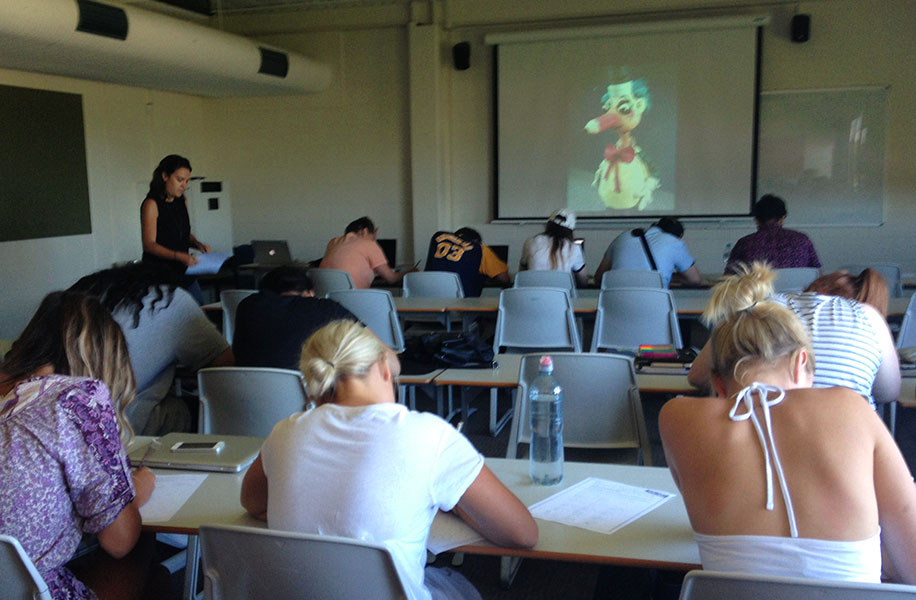
The development of the thesis drawing activities was informed by my visual arts and design practice which continues to be an important aspect of my images. This ongoing exploration of visual perception, repetition, and other aspects of phenomenological drawing processes are combined with a figurative, narrative approach. My love of bodies, the natural world and storytelling is always present in my work.
In turn, my drawing and image-making practice informs further explorations into the power of drawing to not only create, but build confidence and connections which are vital for our wellbeing and mental health. In a post COVID, AI dominated world, our individual and collective identity has been eroded as we face the escalating effects of climate change. We are loosing confidence in facts and long held beliefs in our human ability to effect change when we need it most. We are loosing our control on the stories that define us. The stories of marginalised communities like those found in remote, poor, indigenous communities like Timor-Leste are lost in the regurgitated images and words stockpiled on the data rubbish pile. My research is interested in providing drawing and storytelling tools to allow communities to identify and work through problems they face through telling their stories.
Drawing can give a voice to the voice-less.
 Improdraw